Design You Can Feel: Why Intuitive Spaces Matter in Singapore Homes
| Key point | Details |
|---|---|
| Design Begins With How a Home Feels | Intuitive homes are shaped by understanding how people naturally move and live. Small adjustments in lighting, circulation, and surface placement create spaces that feel effortless and calming. |
| Optimising Airflow and Ventilation | Promoting natural cross-ventilation, installing ceiling fans, and maintaining unobstructed airflow minimises dependence on air conditioning, keeping interiors airy, cool, and energy-efficient in Singapore’s tropical climate. |
| Balance Form and Function | Neutral, earthy tones help unify small spaces and make rooms feel brighter and more expansive. Layered textures add warmth without cluttering the visual experience. |
| Design Around Daily Routines | Spaces feel intuitive when they support real-life behaviours. Furniture layout, pathways, and flexible pieces help homes adapt to daily activities and create smoother flow. |
In Singapore, where every square meter of a flat or condo counts, a home’s success is no longer measured by how it looks but by how it feels. Intuitive spaces guide movement, calm the senses, and support everyday life with ease. From how natural light flows through a room to how furniture shapes circulation, design can subtly transform daily routines without being intrusive. Homes that prioritise feeling over visuals allow residents to move, relax, and interact with their surroundings effortlessly — creating comfort that is as practical as it is elegant.
This article draws inspiration from the insights of Redefine Interior Design, whose philosophy centre on creating homes that are “deeply intuitive and effortlessly lived-in.” Their approach emphasises balance — between form and function, calm and character, refinement and warmth — ensuring that every design decision responds to both lifestyle and space. In Singapore’s compact flats and condos, this attention to how spaces are experienced daily can make even small layouts feel expansive, composed, and welcoming.

Design Begins with How a Home Feels
Homes that feel effortless start with observing how people naturally move through and interact with their spaces. In a typical 4-room HDB flat, small adjustments can transform daily life. A console near the entryway, for example, provides a landing spot for keys, bags, and letters, preventing clutter from spilling onto the dining table. Furniture arranged along natural circulation paths reduces friction in narrow corridors, while layering ambient and accent lighting creates a calm atmosphere in the evenings. During the day, sheer curtains paired with reflective or light-toned surfaces allow natural light to illuminate the space, reducing reliance on artificial lighting and creating a gentle, airy environment. Even small elements, like textured rugs, linen cushions, or low-profile storage benches, soften movement through the home, making it feel lived-in yet refined.
These subtle interventions reflect the core of Redefine Interior Design’s philosophy, showing how thoughtful observation of daily life leads to spaces that are as functional as they are comfortable.
Tip: Notice how your household moves through the home for one week, and introduce practical surfaces or low-profile furniture along these pathways to enhance flow and ease daily routines.
Balance Form and Function in Every Room
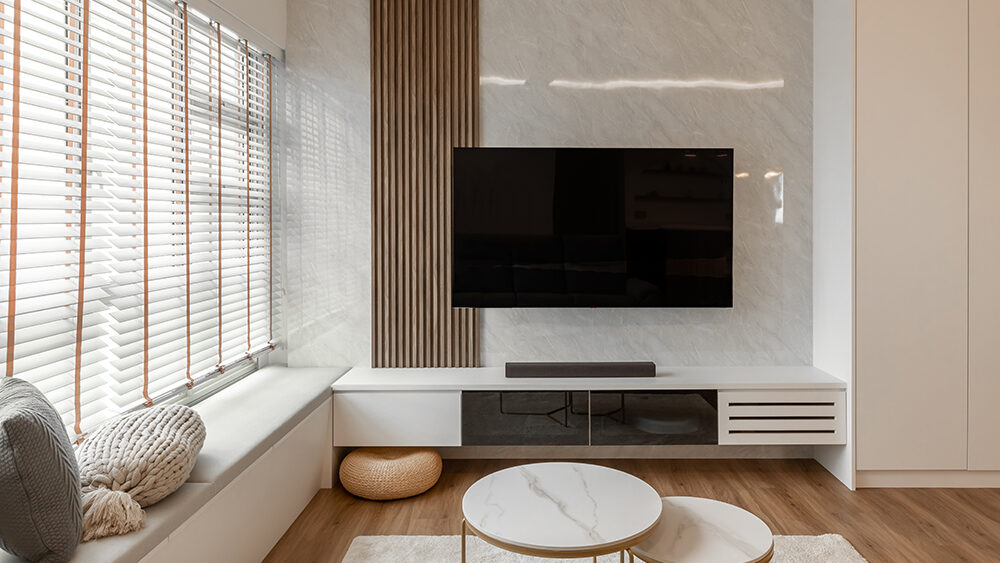
A space that feels harmonious balances aesthetics with practicality. Statement features, such as textured walls or sculptural furniture, are most effective when paired with grounding tones and soft textures. In Singapore flats, where rooms are compact, this balance prevents spaces from feeling chaotic or cramped. A textured travertine wall behind a TV can feel elegant and sophisticated when paired with light oak cabinetry, linen curtains, and minimal accessories. By blending bold elements with calming materials, the home feels composed, warm, and inviting.
This principle, emphasised throughout Redefine Interior Design’s approach, ensures interiors are visually engaging without sacrificing comfort or everyday usability. Rounded furniture edges, layered textiles, and versatile storage pieces further enhance the experience, creating spaces that are both lived-in and thoughtfully designed.
Tip: Choose one focal element per room and pair it with neutral or soft surfaces. Textures, rounded furniture, and practical storage maintain comfort while keeping the space visually balanced.

Grounded Palettes Create Calm, Cohesive Spaces
Colour and material choices subtly shape how a home is experienced. Grounded palettes of warm beiges, muted browns, and soft greys unify multiple rooms, making compact layouts feel more expansive. For example, a 3-room HDB flat can feel brighter and more connected when living, dining, and hallway areas share a cohesive base palette, while accent pieces like cushions, decorative trays, or low-profile lamps add personality. These choices also suit Singapore’s tropical climate: lighter tones reflect natural light, while natural textures absorb warmth, creating interiors that are comfortable both visually and physically.
By layering subtle textures over neutral bases, homeowners can create depth and warmth without overcrowding spaces.
Tip: Use neutral tones for walls and large surfaces, then introduce texture and accent colours through furniture, soft furnishings, and small décor items to add character without visual tension.

Design Around Daily Routines and Movement
Intuitive homes anticipate how residents live, ensuring circulation and function align with daily habits. In open-plan layouts common in Singapore, this means arranging furniture along natural paths, placing dining tables to complement kitchen flow, and introducing mobile elements like small islands or benches to support casual interaction. Each adjustment subtly reduces tension and allows everyday activities to feel smoother.
The thoughtful attention to behavioural patterns is a hallmark of Redefine Interior Design’s perspective, showing that interiors should adapt to lifestyles, not the other way around. By designing with daily routines in mind, spaces become a seamless extension of life rather than a static backdrop.
Tip: Map household routines and design furniture placement, storage, and pathways to support them. Simple, low-profile interventions like side tables, benches, or catchall trays can significantly enhance the ease of daily living.

A Home That Feels Effortless
In Singapore flats and condos, design that begins with feeling transforms everyday life. Prioritising intuitive flow, balanced form and function, grounded palettes, and lifestyle-driven layouts makes homes not only visually appealing but deeply supportive of the people who live in them. By reflecting the philosophy of Redefine Interior Design, this article celebrates a design approach that is thoughtful, human-centred, and deeply attentive to how spaces are used. For homeowners, this means interiors that are truly lived-in, effortless, and personally resonant — a space that feels right every day.

Good design is not just what you see — it’s what you sense. A home should feel intuitive, calm, and effortlessly lived-in.
If this is the direction you see for your home, reach out to us and we will match you with designers who share the same philosophy of warmth, balance and intuitive living.